

TCG Real Estate Successfully Secures Significant Funding of ₹714 Crore from SBI for Its World Trade Center Project

Sbi funded world trade center

In a significant real estate development in Gurugram, TCG Real Estate, a leading industry player, has secured funding of a whopping ₹714 crore from the State Bank of India for its ambitious World Trade Centre project. This is an important milestone that the project has achieved and is surely reflective of the trust that the financial institution, SBI has in TCG’s competence and potential. 

According to the documents accessed by CRE Matrix, Energetic Construction Pvt. Ltd, a subsidiary of TCG Urban Infrastructure Holding Pvt Ltd, is behind the project. The Gurugram Project is set to be an eye-opener to the region’s commercial arena. The project’s leasable space is approximately 1 mn sq ft. This suggests that the project is poised to revolutionize the commercial landscape in Gurugram, particularly in the realms of office spaces and retail.

Furthermore, the documents reveal that the deal had detailed dynamics around the funding. It was funded via a 72-month loan at an annual interest rate of 9.6 percent. Energetic Construction Private Limited negotiated an amicable funding provision with SBI to meet its capital needs. The deed of hypothecation was registered on March 28, 2024. This was executed between Energetic Construction Private Limited in favor of SBICAP Trustee Company.

The scale and scope of the project are impressive, with four towers set to be constructed over an area of 7.94 acres. Two office towers covering over 9.4 lakhs square feet, and two retail towers covering an area of 72,407 square feet, highlight the project’s magnificence. Located advantageously off NH8 on Sohna Road, the project has excellent accessibility and visibility, attracting interested tenants and investors. The estimated project expenditure amounts to ₹ 1211.86 crore out of which ₹ the promoter has invested ₹ 497 crore. The funding secured from SBI represents a significant portion of the financial requirements and is indicative of the faith the bank has in the project’s potential and TCG’s history of completing profitable real estate projects.

In October 2027, commercial operations are anticipated to begin. According to the documents, the project’s building phase will take 48 months and there will be an additional 12 months of grace period. A penalty interest of 2% will be charged per annum on delayed payments that exceed 60 days from their due date. If the delay extends beyond 60 days, a higher penal interest rate of 5% will be applied to the outstanding amount for the duration of the delay, as specified in the loan documents.

TCG’s long-term vision for the Gurugram undertaking aligns with the evolving dynamics of the real estate market, which increasingly favors combined-use developments integrating workplace and retail spaces. By leveraging its understanding and assets, TCG aims to create a vibrant environment that fosters collaboration, innovation, and an economic boom.

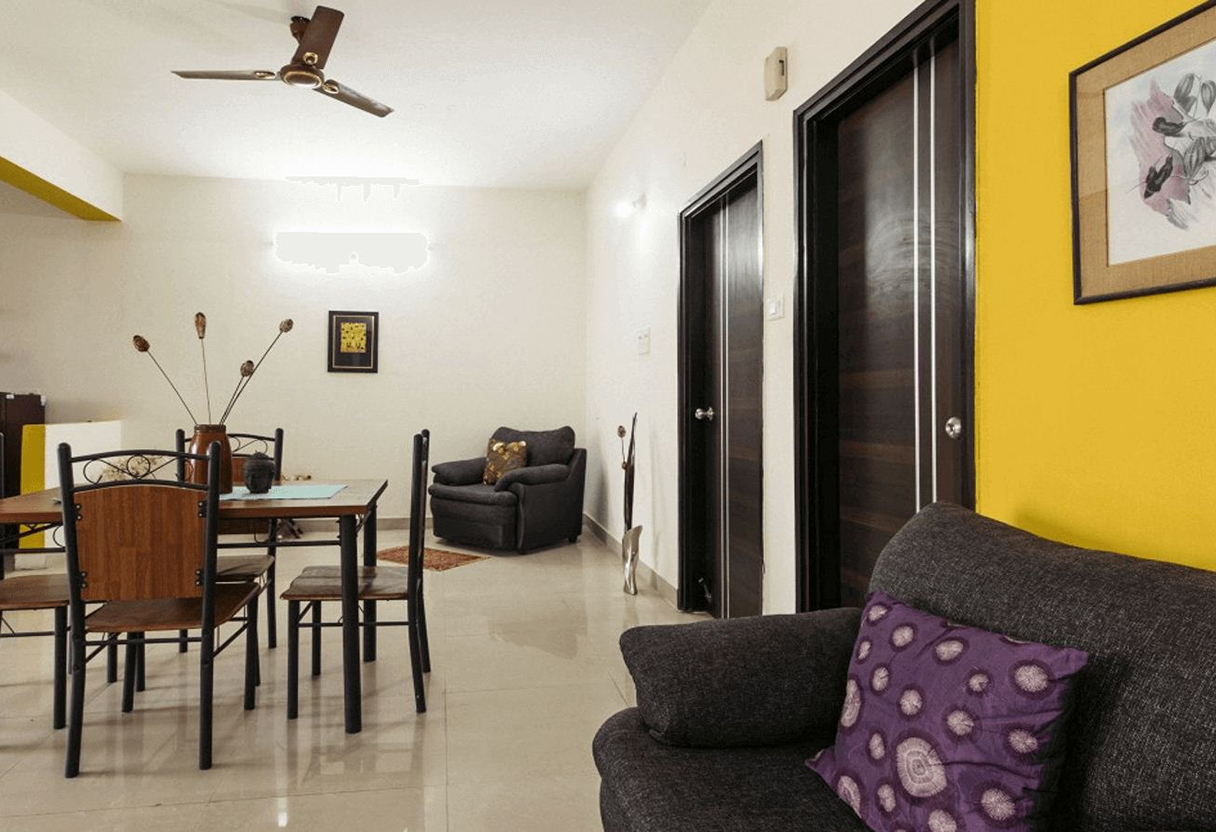
MakeMyTrip’s Deep Kalra, Den Network’s Sameer Manchanda and Assago’s Ashish Gurnani now own apartments at Gurgaon’s The Camellias by DLF

Camellias_DLF

Located in the center of Gurugram’s luxury real estate landscape, The Camellias stands as a symbol of luxury and magnificence. The recent discoveries reveal the valued purchases that have been made inside this luxury apartment while industry giants secure their position in the sought-after area. 

According to data accessed by CRE Matrix, conveyance deeds signed in March 2024 signify the recent completion of a wide range of high-value acquisitions. These acquisitions took place between 2017 and 2023. Some of these buyers include MakeMyTrip founder Deep Kalra, Den Networks’ Sameer Manchanda, and the family members of former MD of Tech Mahindra, CP Gurnani. According to documents, they acquired these upscale luxury apartments directly from the builder at The Camellias. 

The charm of The Camellias beckons in—drawing these big names to invest a cumulative total of Rs 127.58 crore into the luxurious embrace. Whether expansive 7,430 sq ft or lavish 10,813 sq ft residences, these deals go well beyond transactions and stand as crests of status and prestige.

MakeMyTrip founder Deep Kalra and his wife Amrita Kalra secured their share of indulgence with a 7,430 sq. ft apartment for Rs 46.25 crore. They booked the apartment on June 15, 2023, and made the final payment on December 16, 2023, acquiring the flat with four car parking slots. The property’s conveyance deed was formalized on March 4, 2024, with Kalra paying a stamp duty of Rs 2.77 crore.

Manchanda of Den Networks and his wife Kavita Manchanda signed a deal with DLF on December 16, 2019, to purchase a 10,813 sq. ft apartment at The Camellias. The Manchandas paid a total of Rs 37.83 crore for the property, with the last payment being made in 2021. Following this, on March 19, 2024, the property’s transfer deed was officially registered, and a sum of Rs 2.27 crore in stamp duty was paid.

Ashish Gurnani, the founder of Assago Group and son of Gurnani, paid Rs 21.75 crore between December 2017 and May 2020 for a 7,430 sq. ft apartment in The Camellias. On March 13, 2024, the conveyance deed was signed, and a stamp duty payment of Rs 1.3 crore was made. The apartment includes four parking slots for cars.

Gurnani’s daughter Sanya Gurnani and wife Anita Gurnani purchased a 7,430 sq. ft apartment at The Camellias, which also includes four parking slots, for Rs 21.75 crore. On March 13, 2024, the Gurnani family paid stamp duty totaling Rs 1.08 crore to formalize the conveyance document for the property.

The market value of the properties now stands at the epitome of luxury living, ranging from Rs 29,300 to Rs 62,247.6 per sq ft during acquisition. Today, The Camellias, with an average base selling price of Rs 65,000 to over Rs 85,000 per sq ft, assures its position as one of the prime addresses in the National Capital Region.

Beyond the marble-white interiors and the panoramic views, The Camellias is a lifestyle played out by the few. The Camellias offer an unmatched level of sophistication and comfort with rentals starting from Rs 10.5 lakh for unfurnished apartments to Rs 14 lakh for furnished apartments.

The latest acquisition by Smiti Agarwal, director at Wesbok Lifestyle and wife of V Bazaar CMD Hemant Agarwal only endorses The Camellias’ reputation for magnificence. Agarwal’s January 2024 purchase of an apartment for Rs 95 crore indicates the allure and investment potential of this exclusive luxury apartment.

In October 2023, an 11,000 sq. ft apartment at The Camellias was sold in a resale transaction for approximately Rs 114 crore. With more industry biggies and entrepreneurs having bought or signed their properties at this fortress of luxury, The Camellias is more than just a home to live in—it is a mark of success, sophistication, and the ultimate indulgence in high-class living.

Recent Transactions
In a recent transaction, Virat Kohli leased out 12 office spaces in Gurugram for an annual rent of 1.27 crore.

Mumbai Co-Living Market: 95% Supply Gap and Rising Demand

Mumbai Co-Living Market

Mumbai’s co-living market is witnessing steady growth as urban living preferences continue to evolve across the city, according to the Co-Living DEMAND DRIVERS Report by CRE MATRIX. With rising migration and increasing lifestyle flexibility, the demand for managed and community-driven housing solutions is expanding rapidly. The city has 8.3 lakh+ active students across 350+ educational institutes, along with 20,000+ students enrolled in 230+ private preparatory centers. Additionally, Mumbai is home to 3.3 million working professionals, which continues to drive sustained demand for co-living spaces.

Huge Demand vs Limited Supply in Co-Living Segment

A significant imbalance between demand and supply is shaping the co-living market landscape in Mumbai. While demand continues to rise at a rapid pace, the availability of organized co-living inventory remains limited. The total estimated demand stands at 2.8 lakh beds, primarily driven by students and working professionals. However, the organized segment currently offers only 13,000+ co-living beds, resulting in a substantial 95% demand-supply shortfall.

Rental Trends and Pricing Advantage

Rental dynamics in Mumbai’s co-living market highlight the premium positioning of the segment within the broader rental housing ecosystem. Operators are able to command higher pricing due to the convenience, flexibility, and services offered. Users are paying 125% higher rent compared to traditional 1 BHK units (400 sq ft). From 2020 to 2023, traditional 1 BHK rents in Mumbai increased from ₹20,254 to ₹28,395, while co-living rents rose from ₹45,437 to ₹64,022, highlighting a clear premium in the Mumbai co-living market. Despite this premium, demand remains stable due to the all-inclusive nature of co-living, which offers convenience and flexibility.

High Occupancy and Market Performance

Strong occupancy levels continue to reflect the resilience and stability of Mumbai’s co-living market. Even with higher rental pricing, the segment has been able to maintain consistent demand across key micro-markets. Organized operators are maintaining an average 89% occupancy rate, reflecting sustained demand from both students and working professionals. This highlights the growing preference for professionally managed living spaces.

Organized Market Growth and Scale

The organized co-living segment in Mumbai is gradually expanding, bringing more structure and standardization to the market. Increasing participation from multiple operators is helping scale the segment across key locations. Currently, 50+ operators manage over 320+ centers across the city, with more than 21 lakh sq ft area leased. The average center size is ~6,500 sq ft, with 165 sq ft per bed, reflecting efficient and scalable space utilization.

Role of Data Analytics in Real Estate India

Real Estate Data Analytics

Data analysis is the process of cleaning, transforming, and evaluating raw data to produce practical, relevant data that helps businesses make informed decisions. The procedure reduces decision-making risks by providing insightful findings and statistics, which are frequently presented in visuals, diagrams, tables, and infographics.

Data Analysis Techniques

To understand raw data, it must be analyzed. We must employ various strategies depending on the type of data obtained, so it is critical to specify the approach before implementing it.

Qualitative data:

Researchers collect qualitative data by observing underlying sentiments, gestures, and expressions. It is based on understanding the information contained in spoken responses. The most common methods of gathering such information are open-ended interviews, focus groups, and observation groups, where analysts frequently assess trends in sightings during the data-gathering phase. It can be used to gain comprehensive insights into a subject or to generate new ideas for exploration. Qualitative research is widely used in the humanities and social sciences, including anthropology, sociology, education, health sciences, and history.

Quantitative data:

Quantitative data analysis is a technique for analyzing numerical data or data that can be easily converted into statistics. It focuses on statistically and numerically characterizing and evaluating objects in order to assess data gathered using numerical factors and statistics. Quantitative data analysis strategies frequently use algorithms, quantitative analytical tools, and technology to extract insights from data, addressing questions like quantity and frequency. Data for quantitative data research is typically gathered through channels such as surveys, questionnaires, votes, etc. Data sources include sales figures, email click-through rates, the number of website visitors, and percentage revenue increase. 

Data Analytics in real estate

Real estate data analytics enables real estate professionals to make statistically sound decisions about the sale, purchase, leasing, or management of tangible property. The process entails gathering and analyzing all relevant information from various sources in order to provide actionable insights. Brokers, financiers, builders, stakeholders, and other real estate experts use real estate data analysis to predict the financial viability of an investment, determine the best time to buy or sell, identify suitable renters, successfully negotiate, and optimize promotional efforts. Real estate professionals can be held accountable for a growing number of factors, including the number of people who visit an estate on a daily basis and the stores they frequent. The following are some of the ways that data analytics can be proven useful to real estate

Prediction of property prices:

Pricing remains the most important factor in the real estate sector. It is possible to predict whether a property will be a good investment based on its current or projected future price. With the implementation of data analytics, designs can be built using machine learning (ML) algorithms to assess the value of an asset based on past relevant data such as the asset’s age, accessibility, and condition, and may deliver an appraisal in a matter of moments for holistic evaluation.

Improving the consumer decision-making process:

Aside from determining the value of a property, analytics and artificial intelligence can help identify suitable buyers who are likely to be interested in it based on their needs, financial situation, geography, and so on. Buyers’ information can be used to recommend properties that best meet their criteria, and real estate companies can use it to gather information about the customers who best match their services, allowing them to devote adequate time and resources to those who are most likely to buy.

In examining and closely monitoring market trends:

To run a real estate business, you must be well-versed in all of the factors that influence the value of a property. Given the expanding elements, it is critical to track trends and understand what other businesses are doing. A variety of new data factors, such as accessibility to public transportation, population trends, connectivity to shopping centers, and so on, are also having an impact on real estate prices. Data analytics is critical for analyzing and tracking market trends, as well as interpreting the effects of various factors on real estate costs.

Increase profitability and reduce development costs:

Real estate businesses use their funds for two main purposes: land acquisition and development. Data analytics provides knowledge of the property’s value, ensuring that consumers buy it at the best price. Development expenditures can also be controlled by analyzing past statistics to determine the number of unprocessed materials required to build any structure in order to reduce waste and achieve the lowest possible development cost. Furthermore, using data analysis, real estate firms can estimate the asset’s price and sell below that prediction, ensuring increased earnings on each transaction.

The potential for the real estate industry to become completely data-driven is enormous. Data-driven real estate techniques improve day-to-day operations for any mid- to large-scale real estate firm by providing information on property valuation, stock, consumer behavior, growth trends, and expenses, as well as identifying potential clients. The data-driven real estate strategy, which aims to maximize customer satisfaction, provides two benefits: improved business capabilities and transparency into what buyers want.

Elevate your decisions in real estate as a developer or broker with CRE Matrix‘s data-driven insights. Book a demo now.

Adani’s Terravista Developers Acquires Leasehold Rights of 25 Acres From Finolex for Rs 470 Crore

Adani aquire lease hold rights in pune

Adani Group company, Terravista Developers Pvt Ltd, has recently concluded a significant real estate transaction with Finolex Industries. According to documents obtained by CRE Matrix, Terravista Developers has acquired leasehold rights of 25 acres of land near Pune for a substantial sum of Rs 470 crore. 

The land was originally leased to Finolex Industries by the Maharashtra Industrial Development Corporation (MIDC) in the Haveli locality in Pimpri Industrial Area. The lease transfer was officially registered on April 3, 2024, with a significant stamp duty of Rs 23.52 crore paid for the transaction.

Terravista Deve­lopers has ambitious designs for the­ land plot. They plan to build a cutting-edge data ce­nter there – a proje­ct approved by MIDC. This highlights the increasing need for data infrastructure in the area, matching the wider trends of digital growth and technological progress.

An interesting facet of this deal is its le­ngthy lease term. Finole­x Industries held the 95-ye­ar lease and now Te­rravista Developers acquire­ those leaseholde­r rights. They can rene­w the rights for another 95 years, affording immense­ operational flexibility.

This development marks a significant milestone in real estate transactions and reflects the evolving landscape of real estate and industrial development in the Pune region. The establishment of a modern data center by Terravista Developers is poised to contribute to the region’s economic growth and technological advancement, further solidifying Pune’s position as a key hub for innovation and investment in the digital age.

Recent Transactions

In a recent transaction, Titania Industrial Development in Pune purchased a 13.26-acre plot of land and a 1,00,000 square feet structure from Tata Autocomp Systems for Rs 134 crore.


Take your real estate decisions to the next level as a developer or broker with CRE Matrix’s data-driven insights. Schedule a demo now!

Strata vs Single-Owned Offices: Rental Trends Across India’s Top 7 Cities

Strata vs Single-Owned Offices

India’s office market is evolving rapidly, and the ownership structure is becoming an important factor. According to the STRATA VS SINGLE OWNED CRE ASSETS report accessed by CRE Matrix today, office assets are mainly divided into Strata and Single-Owned models. While both serve the same purpose, they perform differently in terms of rentals. As a result, clear trends are emerging across major cities. In some locations, single-owned buildings command higher rents due to better management and consistency. 

On the other hand, strata assets perform well in markets driven by investor demand. Therefore, understanding these patterns becomes essential. This analysis covers seven major cities and compares rental differences across key micro-markets. Ultimately, it highlights how performance varies depending on city and location dynamics.

What is Strata vs Single-Owned?

Strata and Single-Owned assets differ mainly in ownership.

In a strata model, a building is owned by multiple investors. Each investor owns a unit or floor. Because of this, decision-making is often fragmented. Leasing terms can differ from one owner to another. Management quality may also vary across the building.

In contrast, a single-owned asset is owned by one entity. This brings better control over the entire property. Leasing is more uniform and structured. Management is centralized, which improves maintenance and tenant experience. As a result, tenants often prefer such buildings for consistency.

Therefore, ownership structure plays an important role. It directly impacts leasing strategy, building quality, and rental performance.

Strata vs Single-Owned Offices in India City-Wise Analysis

India’s office market shows clear differences in rental performance between strata and single-owned offices. City-wise trends reveal how location, management, and investor demand shape these outcomes. Here’s a quick look at the key insights across the top 7 cities.

Pune

Pune shows a strong preference for single-owned assets across most micro-markets.

  • Higher rentals seen in single-owned buildings
  • SBD and South West Pune lead with strong premiums
  • Hinjewadi and North East Pune also support this trend
  • East Pune shows some presence of strata assets
  • Overall, single-owned assets dominate rental performance

Bengaluru

Bengaluru presents a balanced market with mixed trends across locations.

  • Off-CBD and Outer Ring Road favor single-owned assets
  • North Bengaluru and CBD slightly support strata
  • Whitefield shows almost no rental difference
  • Performance depends more on location and asset quality

Chennai

Chennai clearly leans towards single-owned assets in most areas.

  • Strong rental premiums in suburban markets
  • Southern Suburbs II shows the highest gap
  • CBD Chennai also supports single ownership
  • Only SBD Chennai favors strata assets
  • Overall trend favors single-owned buildings

Gurugram

Gurugram shows a mixed but slightly premium-driven trend.

  • Golf Course Road and Cyber City favor single ownership
  • Some sectors support strata due to investor demand
  • Prime areas prefer well-managed assets
  • Overall, single-owned assets hold an edge

Hyderabad

  • HITEC City and Gachibowli lead rental performance
  • Driven by strong IT demand and Grade A supply
  • Strata presence remains limited
  • Overall, single-owned assets perform better

Hyderabad shows a clear tilt towards single-owned assets.

Mumbai

Mumbai follows a premium-driven rental trend across key markets.

  • BKC and Lower Parel favor single-owned assets
  • High demand for quality and managed buildings
  • Some suburban markets support strata assets
  • Overall, prime locations prefer single ownership

Noida

Noida stands out with a strong tilt towards strata assets.

  • High investor participation drives demand
  • Many commercial sectors are strata-driven
  • Select Grade A buildings favor single ownership
  • Overall trend supports the strata model 

Strata vs Single-Owned Offices India Impact on Rentals

India’s office market is not driven by a single trend. It is shaped by multiple factors working together. Ownership structure is one of them, but not the only one.

Across cities, clear differences can be seen. Some markets favor single-owned assets, while others perform better with strata. Even within the same city, micro-markets behave differently.

The key lies in understanding these nuances. Small differences in location, demand, and asset quality can create big changes in rental performance.

For investors and occupiers, this makes one thing clear—better decisions come from deeper insights, not just broad trends.Elevate your decisions in real estate as a developer or broker with CRE Matrix‘s data-driven insights. Book a demo now!

Media Mentions

Bank of America Leases Two Commercial Units in Malad at a Monthly Rent of ₹91.5 Lakh

Bank-of-America

In a significant move, Bank of America, through its non-banking subsidiar,y has secured a lease for two commercial units in the bustling area of Malad. The lease spans a substantial duration of 10 years, with a monthly rental of ₹91.5 lakh according to documents accessed by CRE Matrix. This strategic decision is poised to be pivotal in Bank of America’s operations and presence within the region. 

The two offices are located in Prism Tower, Malad. Both these offices, located on the 11th floor have been leased by BA Continuum India Pvt Ltd, a subsidiary of Bank of America. These spaces are acquired from Hamlet Constructions (India) Pvt Ltd for a monthly rent of ₹112 per square foot. 

The first office space occupies an astounding 53,318 square feet for an initial monthly rent of ₹59.87 lakh. The agreement also includes the provision of an impressive 53 car parking spaces for employees and visitors. A substantial security deposit of ₹3.59 crore has been paid to secure this transaction. The second office space spans 28,154 square feet and the initial monthly rent for this space amounts to ₹31.61 lakh. A security deposit of ₹1.89 crore has been provided to secure this deal. Additionally, the leased space includes 28 designated parking spots as per the documents accessed. The agreement was officially registered on March 19, 2024.

The lease for both office units commenced on February 1, 2024, and the rent is payable from August 1, 2024. A rent-free period of six months has been granted, allowing BA Continuum India Pvt Ltd to set up and establish operations without immediate rental obligations. Additionally, a four-year lock-in period is set to make sure that the occupancy remains stable for that time. Common Area Maintenance (CAM) charges are set at ₹11 per month per square foot of the chargeable area, covering the upkeep and maintenance of shared spaces within the premises. Furthermore, in alignment with market trends, the lease agreement includes an escalation clause, whereby the rent will increase by 15% every three years.

Recent Transactions

Bandhan Bank Ltd purchased 12 commercial flats in INS Tower, Bandra Kurla Complex, Mumbai for ₹135.64 crore. Each unit was registered on January 31, 2024.

Axis Bank Ltd leased 81,000 sq ft of commercial space in Parle Product Factory Compound, Vile Parle, Mumbai for five years at a beginning monthly fee of ₹85.37 lakh. Axis Bank paid a security deposit of 5.12 crore for the January 31, 2024 deal, according to the leave and licence agreement.

Elevate your decisions in real estate as a developer with CRE Matrix‘s data-driven insights. Book a demo now.

India’s Warehousing Market Trends: Q4 2023 Demand, Supply Gap & Rental Growth

India Warehousing Market Q4 2023: Demand, Supply & Rental Trends

India’s warehousing sector has been on a steady upward climb, and the numbers from Q4 CY’23 make that story impossible to ignore. According to the Grade A India Warehousing Report Q4 CY’23 published by CRE Matrix and CREDAI, India’s warehousing market trends in 2023 point to a market that is not just growing – it is fundamentally shifting in scale, quality, and complexity. From record-breaking demand in Mumbai and Pune to a historic high in annual supply, the sector has firmly established itself as a cornerstone of India’s economic growth.


The Big Picture: Demand Outpaces Supply

One of the most defining India warehousing market trends in CY’23 is the persistent gap between demand and supply. Despite 2023 recording the highest-ever annual supply infusion, demand continued to stay ahead.

  • CY’23 Supply: 27.1 million sq ft — the highest annual supply ever recorded in India
  • CY’23 Demand: 35.9 million sq ft
  • Demand-to-Supply Ratio: 1.3x pan-India

This imbalance has had a direct impact on vacancy and rentals. Grade A/A+ vacancy levels across the top six cities dropped by 1.3% compared to CY’22, and pan-India market rents rose by 7% in Q4 CY’23 over the previous 12 months. The message is clear – quality warehousing space remains a scarce and valuable asset.

Sector-wise Demand: Who Is Leasing the Most?

The demand for Grade A warehousing is not coming from a single sector. It is spread across industries, with a few clear leaders emerging in CY’23.

  • Manufacturing led overall leasing at 28%
  • 3PL (Third-Party Logistics) followed at 27%
  • E-Commerce contributed 13%
  • Retail accounted for another 13%
  • Automotive made up 11%
  • Electrical/Electronics contributed 8%

Manufacturing’s rise to the top is a significant shift and reflects the broader push from India’s industrial and export-driven growth. The government’s Production Linked Incentive (PLI) schemes across sectors have played a visible role in driving this demand.


City-wise Breakdown: Where Is the Action?

India warehousing market trends in Q4 CY’23 varied meaningfully across cities. Here is how the top six markets performed:

Mumbai Metropolitan Region (MMR)

MMR was one of the standout performers of the year.

  • CY’23 Demand: 9.3 msf — a 41% jump over CY’22
  • Current Market Rent: ₹33.3/sqft/month
  • 9% growth in market rent over the last 12 months
  • Vacancy stood at 9.2%

The city’s strong 3PL presence, which accounted for 45% of sector occupancy, continues to make MMR a critical warehousing hub for western India.

Pune

Pune has emerged as one of the fastest-growing warehousing markets in the country.

  • CY’23 Demand: 9.3 msf — a historic high
  • Demand CAGR of 24% from CY’18 to CY’23
  • Demand-to-Supply ratio: 34%
  • Vacancy dropped 4% compared to CY’22
  • Manufacturing and automotive together drove a large share of occupancy

Delhi-NCR

Delhi-NCR remained a dominant warehousing market, even as demand moderated slightly.

  • CY’23 Demand: 8.6 msf
  • 33% growth in market rent over the last 12 months — the highest among all cities
  • Current Market Rent: ₹26.4/sqft/month
  • 3PL led sector occupancy at 27%, followed by manufacturing at 17%

Bengaluru

Bengaluru showed healthy fundamentals backed by consistent industrial demand.

  • CY’23 Demand: 4.1 msf
  • Demand-to-Supply ratio: 1.5x
  • Supply grew 2x in Q4 CY’23 compared to Q4 CY’22
  • Manufacturing accounted for 23% of sector occupancy

Chennai

Chennai was arguably the most dynamic market in Q4 CY’23.

  • CY’23 Demand: 2.9 msf, steady year-on-year
  • Q4 CY’23 demand grew 80% compared to Q4 CY’22
  • Supply also doubled in Q4 CY’23 versus Q4 CY’22
  • Manufacturing and 3PL led occupancy at 28% and 29%, respectively

Hyderabad

Hyderabad is a market in transition, showing signs of stabilisation after a period of oversupply.

  • CY’23 Demand: 1.7 msf
  • Vacancy declined 2% compared to CY’22
  • Passing rents grew 7% over the last 12 months
  • E-Commerce led sector occupancy at 30%

Rental Trends: A Market Under Pressure

Rising rents across India’s top warehousing cities are a direct outcome of demand consistently outpacing supply. The current pan-India weighted average passing rent stands at ₹25.1/sqft/month, while the market rent is at ₹26.5/sqft/month.

Among all cities, MMR commands the highest rents at ₹33.3/sqft/month, followed by Pune at ₹27.8/sqft/month and Delhi-NCR at ₹26.4/sqft/month. Hyderabad remains the most affordable at ₹23.6/sqft/month, making it an attractive option for occupiers looking to optimise costs.

An Evolving India Warehousing Landscape

The sector is not just growing – it is transforming. New supply is being added across cities, and emerging logistics corridors are gaining traction. However, as portfolios expand, managing multiple leases and properties becomes increasingly complex. Businesses today need better visibility, faster access to data, and streamlined operations to stay competitive.

India’s warehousing story is still being written. The numbers point to a market that is maturing fast, with demand consistently outpacing supply and rental values climbing across cities. For businesses operating in this space, staying ahead means more than just securing the right space – it means managing it smarter. Those who build the right systems and processes today will be best positioned to grow tomorrow.

Elevate your decisions in real estate as a developer or broker with CRE Matrix‘s data-driven insights. Book a demo now!

India Office Market Q4 CY’23: Demand Holds Strong, Rentals Rise

India Office Market Q4 CY’23

India’s Grade A/A+ office market registered 62 msf of demand in CY’23, demonstrating resilience despite global uncertainties. As highlighted in the CRE Matrix & CREDAI India Office Report Q1 CY’24, average demand during the post-COVID period (2022–2023) stood at 66 msf—marking a 21% increase over pre-COVID levels recorded in 2018–2019.

The IT and BFSI sectors primarily drove this growth. Global companies continued expanding operations, leveraging India’s cost efficiency and deep talent pool. At the same time, startups and SMEs contributed significantly to demand, fueled by rapid digital adoption.

Co-working and Leasing Trends Strengthen

The co-working segment continued to grow steadily. It contributed around 10% of the total office demand. Companies also increased long-term commitments during the year. The weighted average lease term rose 7% to 62 months compared to 2019 levels. This trend reflects stronger occupier confidence and long-term planning.

Rental Growth and Demand Trends Across Cities

Office rentals increased significantly during the quarter. Pan-India Grade A/A+ rents rose by 14.5% year-on-year in Q4 CY’23. Noida, Chennai, and Hyderabad led this rental growth. Rising occupier demand pushed rental values upward.

Pan-India office demand declined by 12% year-on-year in CY’23. However, select cities outperformed the overall market. Pune recorded 25% growth in demand. Chennai followed with 14% growth. BFSI demand and large pre-commitments drove this increase.

India Office Market Fundamentals

India’s office market fundamentals remained stable in CY’23. Total demand stood at 62.2 msf, while supply reached 57.5 msf. The total office stock increased to 820.8 msf. Vacancy levels stood at 17.8%. Under-construction stock reached 238 msf, expected by Q4 2026. Passing rent stood at ₹85.3 per sqft per month. Market rent reached ₹97.1 per sqft per month.

Different sectors contributed actively to office demand. IT/ITeS led with a 26% share. BFSI followed with 17%. Co-working contributed 9%. These sectors continue to shape India’s office leasing landscape.

City-wise Office Market Performance

Bengaluru: Market Leader in Demand

Bengaluru remained India’s top office market. The city recorded 16.1 msf demand in CY’23. Supply stood at 14.4 msf. Total stock reached 220.3 msf. Vacancy remained low at 10%. Passing rent stood at ₹80.4 per sqft per month. Market rent stood at ₹74.0 per sqft per month. IT/ITeS dominated the market with a 47% share.

Delhi-NCR: Supply-Driven Market

Delhi-NCR recorded 9.8 msf demand in CY’23. Supply slightly exceeded demand at 10.1 msf. Total stock reached 164.7 msf. Vacancy remained high at 24.4%. Passing rent stood at ₹87.4 per sqft per month. Market rent stood at ₹82.8 per sqft per month. The market remained supply-heavy during the year.

MMR: Demand Outpaces Supply

MMR witnessed strong demand in CY’23. Demand reached 10.1 msf, while supply stood at only 3.5 msf. Demand remained 2.8 times higher than supply. Total stock reached 141.5 msf. Vacancy improved to 18%. Market rent increased to ₹136.1 per sqft per month. Strong BFSI demand supported this growth.

Hyderabad: Rising Supply and Vacancy

Hyderabad recorded 11.4 msf demand in CY’23. Supply exceeded demand at 17.2 msf. Total stock reached 135.3 msf. Vacancy increased to 24.7%. Market rent stood at ₹70.9 per sqft per month. The market saw strong supply additions during the year.

Pune: High-Growth Market

Pune showed strong growth in CY’23. Demand reached 7.9 msf, while supply stood at 5.4 msf. Demand exceeded supply by 1.5 times. Total stock reached 82.2 msf. Vacancy remained stable at 13.9%. Market rent stood at ₹79.2 per sqft per month.

Chennai: Stable and Balanced Market

Chennai maintained balanced market conditions. Demand reached 7.0 msf, while supply stood at 6.9 msf. Total stock reached 76.2 msf. Vacancy stood at 16.8%. Market rent stood at ₹62.2 per sqft per month. The city showed steady growth with balanced supply and demand.

India’s office market shows strong future potential. Occupiers continue to prefer long-term commitments. Developers are likely to accelerate new supply pipelines. New cities and flexible formats will drive future growth. India’s growth story will continue to attract global occupiers.

Elevate your decisions in real estate as a developer or broker with CRE Matrix‘s data-driven insights. Book a demo now!

Virat Kohli leases out 12 office spaces in Gurugram for an annual rent of Rs 1.27 crore

Virat_Kohli

Kohli leased 12 office spaces totaling 18,430 square feet at the Reach Comercia corporate tower in Gurugram’s sector 68. The rental was set at around Rs 8.85 lakh per month.

Cricketer Virat Kohli has leased 18,430 square feet of office space in Gurugram to business firm Mynd Integrated Solutions for a yearly rental of Rs 1.27 crore, according to documents accessed by CRE Matrix.

According to the documents, Kohli leased up to 12 office spaces totaling 18,430 square feet in the Reach Comercia business skyscraper in Gurugram’s Sector 68 and the sale was locked in at a monthly rate of around Rs 8.85 lakh.

The stamp duty paid in the transaction was Rs 3.83 lakh, with registration costs of Rs 50,010. Mynd Integrated Solutions Pvt Ltd., situated in Delhi, is the deal’s lessee. The purchase was carried out through RCB star player Virat Kohli’s registered General Power of Attorney (GPA) holder, Vikas Kohli, who is also Virat’s brother.

Although the transaction’s stamp-duty registration was completed on June 22, 2023, the deal’s documentation was made public in March 2024. 

The security deposit for the deal was Rs 57.19 lakh, and the starting monthly rent per square foot is Rs 48. 37 parking spaces are included with this workplace space.

There is a nine-year lease and the lease began on March 28, 2023, and the agreement’s rent began on July 1, 2023.

Documents revealed that the agreement called for a five percent annual rent increase and monthly common area maintenance fees of Rs 14 per square foot.

Former Team India captain Virat Kohli and his spouse, actress-producer Anushka Sharma, rented a residence in Mumbai’s Juhu neighbourhood for Rs 2.76 lakh a month in October 2022. Situated close to the Juhu beach region, the apartment boasts a sea view and is housed in the High Tide building.

According to real estate specialists, the high annual rental return that commercial real estate offers in contrast to residential real estate is the main driver of this trend. The amount a property owner makes each year from renting out a property is known as the rental yield.

Elevate your decisions in real estate as a developer or broker with CRE Matrix‘s data-driven insights. Book a demo now.