
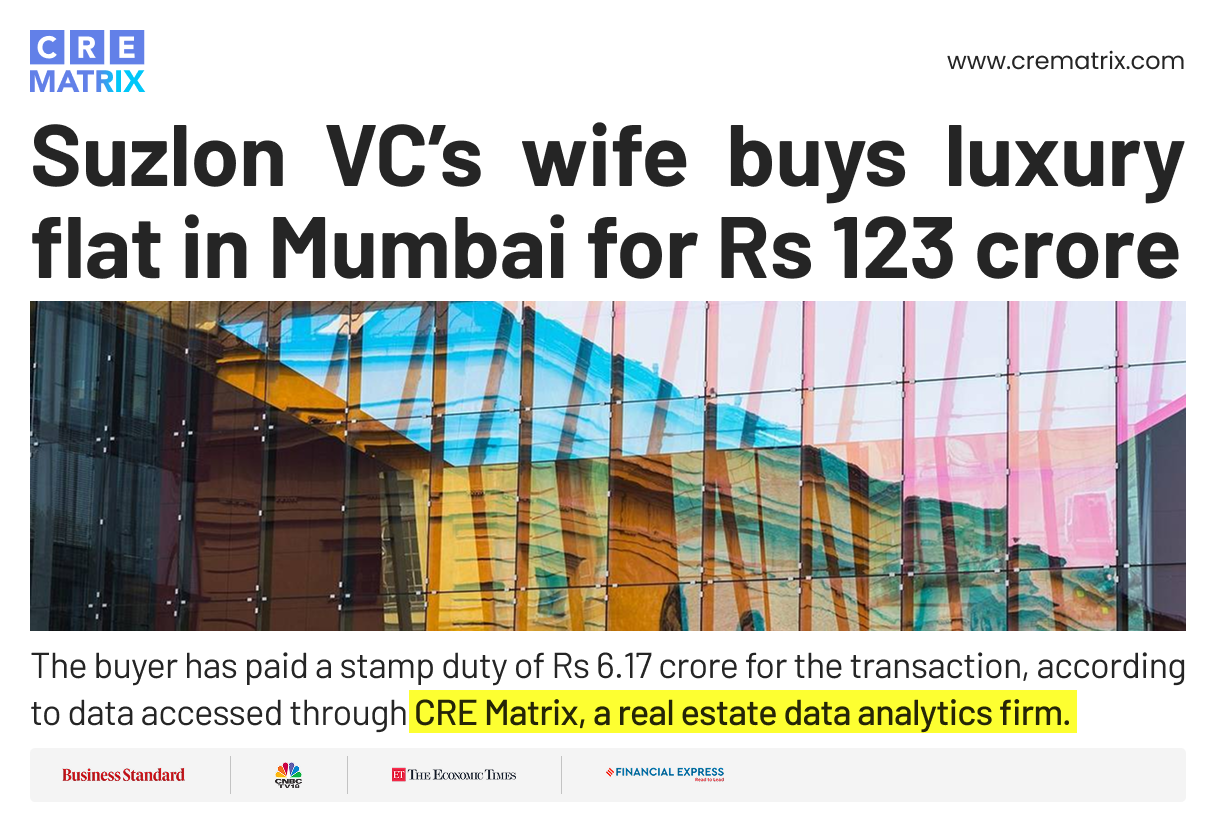
Mumbai’s ultra-luxury home market continues to experience historic transactions, indicating strong demand at the upper end. Radha Tanti, angel investor and wife of Suzlon Energy executive vice chairman Girish Tanti, has purchased a premium apartment in Worli for Rs 123.5 crore, according to property documents accessed by CRE Matrix. The acquisition demonstrates the area’s popularity among business families and wealthy investors. It further strengthens Worli’s reputation as one of Mumbai’s most desirable premium residential areas.
Property Overview and Transaction Details
The Rs. 123.5 crore transaction includes a premium apartment on the 44th functional floor of Artesia, a super-luxury residential skyscraper near the Doordarshan Centre in Worli. The apartment has an RERA carpet area of roughly 6,772.28 sq ft. It also includes 367.05 sq ft of balcony or open terrace space, making it one of the biggest properties in the development. The seller of the property is K Raheja Corp’s Ravi Raheja and Sumati Raheja. A stamp duty of about Rs 6.18 crore was paid for registration.
Worli’s Growth as a Luxury Residential Hotspot
Worli continues to attract ultra-high-net-worth individuals because of its central location and improved connectivity, aided by infrastructure developments like the Bandra-Worli Sea Link and the coastal road, which improve access to key commercial hubs such as Lower Parel and BKC.
What This Deal Signals for Mumbai Luxury Housing
The luxury housing segment in Mumbai continues to show stable demand trends. Large-format homes in prime locations remain in limited supply. Buyers with strong balance sheets continue to prefer tangible assets. This combination supports steady demand at the top end of the market. Buyers remain selective, but premium homes in strategic locations continue to close high-value deals.
In a recent transaction, a US-based Non-Resident Indian (NRI) purchased two sea-facing luxury apartments in Bandra West, Mumbai, for a staggering ₹56 crore.
Elevate your decisions in real estate as a developer or broker with CRE Matrix‘s data-driven insights. Book a demo now!
Media Mentions
- Business Standard: High-end Worli apartment with six car parks sold for ₹123.5 crore.
- CNBC TV18: Mumbai luxury home sold for ₹123.5 crore: Worli’s Artesia sees another big-ticket apartment deal.
- The Economic Times: Mumbai’s Worli sees another ₹123-crore luxury apartment sale
- Financial Express: Suzlon VC’s wife buys luxury flat in Mumbai for Rs 123 crore.