

Will India’s Luxury Residential Market Boom in 2026?

Will-Indias-Luxury-Residential-Market-Boom-in-2026

India’s luxury residential market is no longer a niche driven by a handful of marquee developments. It has evolved into a multi-city, demand-backed segment, supported by wealth creation, capital market liquidity, and changing buyer expectations.

The question is no longer whether luxury housing has demand but whether this momentum is cyclical or structural as the market approaches 2026.

The transaction data suggests the latter.


Luxury Sales: Scale and Depth Across Cities

Recent transaction activity indicates that luxury housing has achieved both scale and geographic diversification.

Gurugram: India’s Largest Luxury Market

  • 4,659 luxury units sold
  • Transaction value: ₹36,669 crore

Gurugram leads the country due to:

  • Concentration of HNIs and CXOs
  • Strong global corporate presence
  • Large-format luxury developments with gated ecosystems

The market benefits from both end-user demand and long-term investor confidence.


Mumbai: Capital Value Leadership

  • 2,059 luxury units sold
  • Transaction value: ₹22,257 crore

Mumbai’s luxury segment remains defined by:

  • Scarcity of land
  • Strong redevelopment pipeline
  • Ultra-high ticket sizes driven by location and exclusivity

Despite lower unit volumes compared to NCR, Mumbai commands unmatched capital depth.


Hyderabad: Rapid Luxury Market Maturity

  • 1,158 units sold
  • Transaction value: ₹10,398 crore

Hyderabad’s emergence reflects:

  • Technology-led wealth creation
  • Influx of senior management and entrepreneurs
  • Preference for larger homes and gated communities

Luxury here is driven by lifestyle consumption rather than legacy wealth alone.


Broadening of India’s Luxury Map

The luxury narrative is now clearly expanding beyond traditional strongholds.

  • Noida: 770 units | ₹6,840 crore
  • Bengaluru: 633 units | ₹4,508 crore
  • Ahmedabad: 206 units | ₹1,605 crore

These figures indicate that high-value housing demand is becoming multi-nodal, supported by regional wealth creation and improving urban infrastructure.


What Is Driving Luxury Housing Demand?

1. Wealth Creation and Capital Allocation

Equity markets, entrepreneurship, and GCC-led income growth have expanded the luxury buyer base.

2. Shift in Buyer Preferences

Buyers are prioritising:

  • Larger homes
  • Low-density living
  • Premium amenities and privacy

Luxury is increasingly being viewed as a primary residence, not just an investment.

3. Strong End-User Participation

Unlike past cycles, current luxury absorption is largely end-user driven, reducing speculative risk.


Supply Discipline: A Key Difference This Cycle

Developers are showing greater restraint:

  • Phased launches
  • Clear differentiation between premium and luxury
  • Focus on branded, high-quality developments

This discipline has helped avoid inventory overhangs that plagued earlier luxury cycles.


Will the Luxury Market Boom in 2026?

The data points to sustained growth rather than a speculative boom.

Key indicators supporting this view:

  • Strong absorption across multiple cities
  • High-value transactions backed by income and wealth creation
  • Limited supply of true luxury assets
  • Increasing preference for lifestyle-led housing

Luxury housing in India is transitioning from an aspirational segment to a structural asset class.


Risks to Monitor

  • Price overshooting in select micro-markets
  • Over-extension of ultra-luxury supply
  • Sensitivity to global economic volatility

However, these risks remain localized rather than systemic.


Outlook: A Mature Luxury Cycle Ahead

As India approaches 2026, the luxury residential market is likely to see:

  • Continued absorption in NCR and MMR
  • Faster maturation of luxury segments in cities like Hyderabad, Bengaluru, and Noida
  • Greater institutional interest and branded development

The luxury story is no longer confined to a few pin codes. It is becoming a national real estate theme, anchored in economic reality rather than speculation.

1. Is India’s luxury residential market growing or slowing down?
India’s luxury residential market is growing and showing signs of structural strength. Transaction data across multiple cities indicates sustained end-user demand rather than speculative activity.


2. Which cities are leading India’s luxury housing market?
Gurugram and Mumbai lead India’s luxury housing market in terms of transaction value and depth, followed by emerging luxury hubs such as Hyderabad, Noida, Bengaluru, and Ahmedabad.


3. What is driving demand for luxury homes in India?
Demand is driven by wealth creation, capital market liquidity, senior executive and entrepreneurial income growth, and a shift in buyer preference toward larger, low-density, lifestyle-oriented homes.


4. Is luxury housing demand end-user driven or investor driven?
Unlike previous cycles, current luxury housing demand is largely end-user driven. Buyers are increasingly purchasing luxury homes as primary residences rather than purely investment assets.


5. Will India’s luxury residential market boom in 2026?
The market is more likely to see sustained, demand-backed growth rather than a speculative boom. Limited supply of true luxury assets and strong absorption support long-term stability.


6. What risks should investors and developers watch in the luxury housing segment?
Key risks include price overshooting in select micro-markets, over-extension of ultra-luxury supply, and sensitivity to global economic conditions. These risks remain localized rather than systemic.


7. How is India’s luxury housing market evolving across cities?
Luxury housing is becoming multi-nodal, expanding beyond traditional strongholds into cities like Hyderabad, Bengaluru, Noida, and Ahmedabad, supported by regional wealth creation and improving infrastructure.

Elevate your decisions in real estate as a developer or broker with CRE Matrix‘s data-driven insights. Book a demo now!

DLF’s Sidhant Real Estate Acquires Iconic Bungalow in Lutyens’ Delhi for ₹150 Crore

DLF’s Sidhant Real Estate Acquires Iconic Bungalow in Lutyens’ Delhi for ₹150 Crore

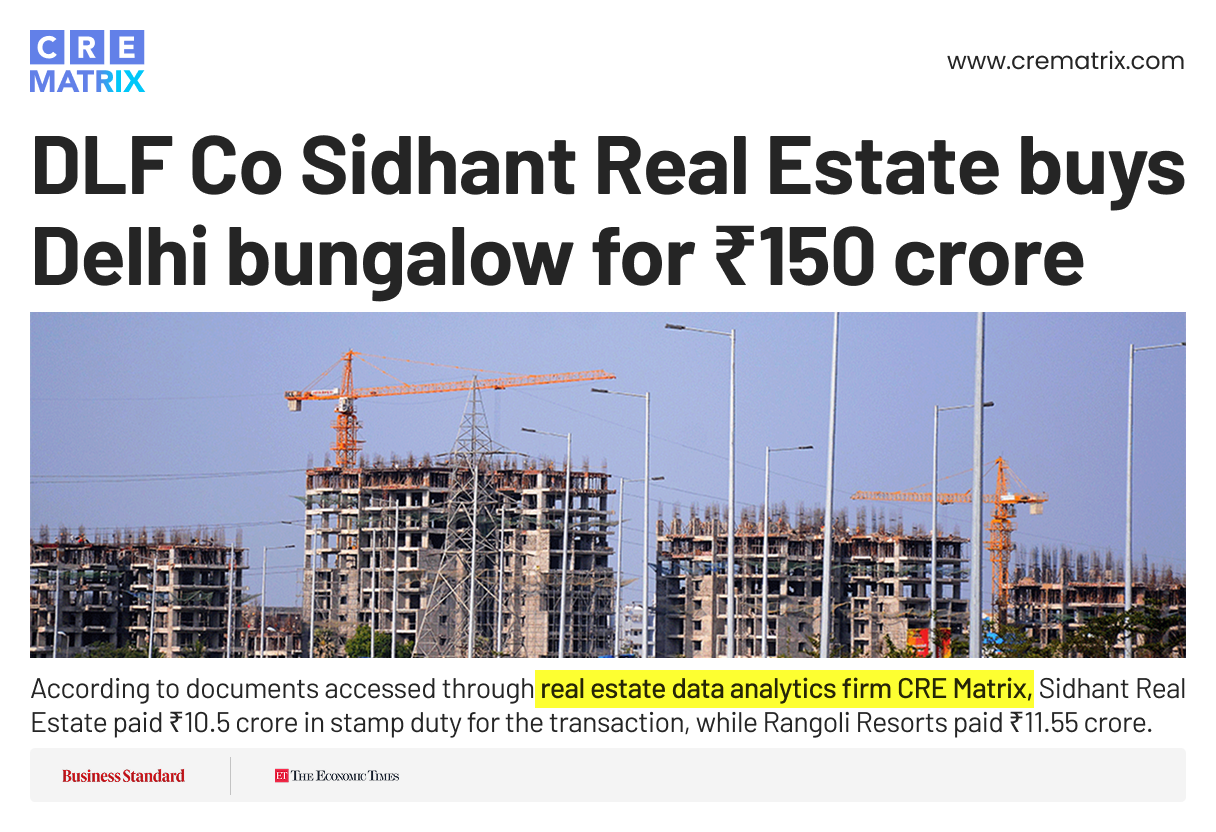
Sidhant Real Estate, a company led by DLF Chairman Rajiv Singh and his family, is in the headlines for the acquisition of a grand bungalow in the upscale neighborhood of Prithviraj Road in Lutyens’ Delhi. The transaction, valued at ₹150 crore, according to documents accessed by CRE Matrix is a testament to the rising demand for ultra-luxury properties in the capital’s most coveted areas.

The bungalow was acquired from Rangoli Resorts, a company where Sheela Foam’s executive chairman, Rahul Gautam, and his family serve as directors. According to the documents, Sidhant Real Estate paid a stamp duty of ₹10.5 crore.

Rangoli Resorts, known for its association with Sheela Foam, also completed another high-value transaction last year, purchasing a bungalow on Hailey Road for ₹165 crore. Both deals were finalized in October 2024 and listed on the India Sotheby’s International Realty platform, showcasing their exclusivity.

While Rangoli Resorts’ dealings show the glamour of luxury real estate investments, Sidhant Real Estate’s acquisition stands in the spotlight. It not only adds to the portfolio of the company but also brings Lutyens’ Delhi to the forefront of high-net-worth individuals searching for luxury properties.

This transaction is just one more example of DLF’s history of large, high-end developments and acquisitions, as Sidhant Real Estate continues to gain prominence and stature in the luxury real estate market.

Recent Transactions in Delhi

The market for luxury real estate in Delhi is still highly competitive, with high-profile deals occurring in some of the most desirable areas in the city. These transactions demonstrate the rising demand for upscale real estate in desirable neighborhoods like Lutyens’ Delhi.

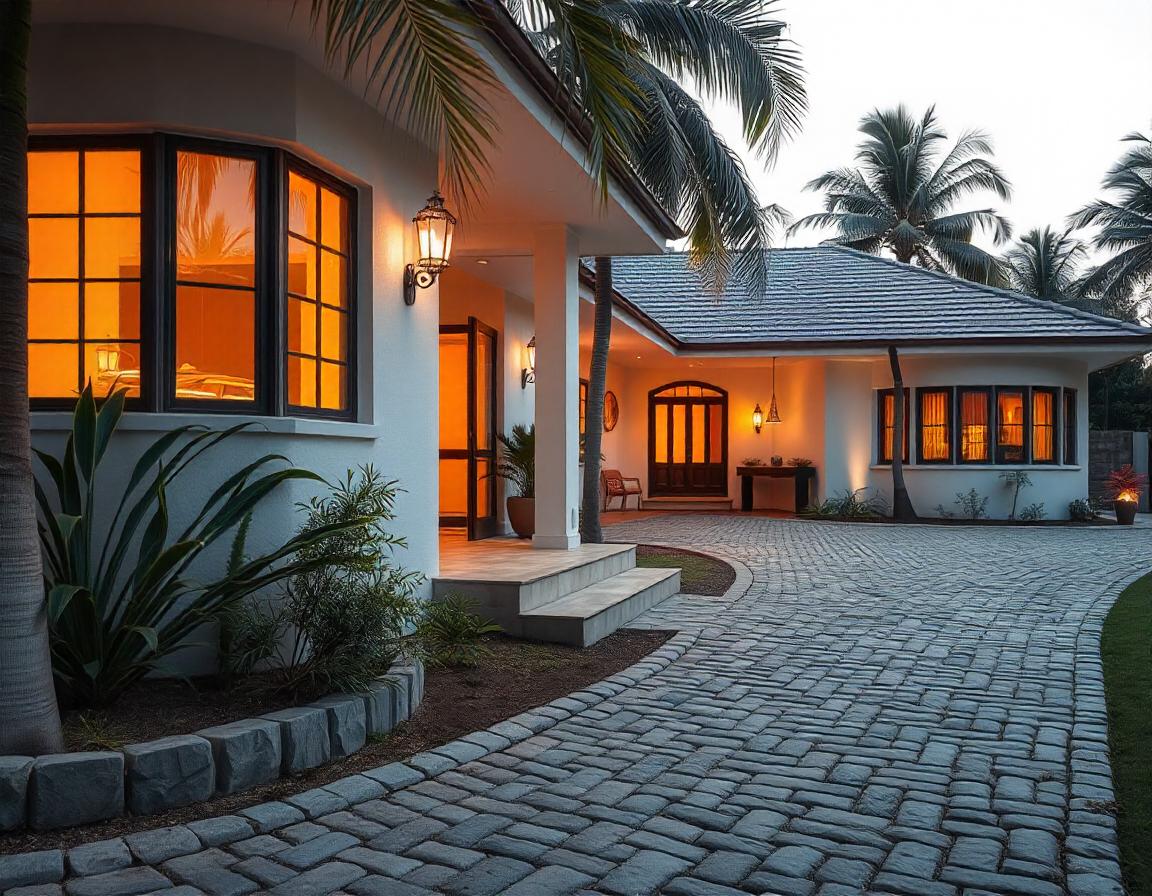
In a recent transaction, Anurang Jain, the managing director of auto component leader Endurance Technologies purchased a 1,350 square-yard bungalow on Kautilya Marg, New Delhi for a substantial sum of ₹130 crore.

Elevate your decisions in real estate as a developer or broker with CRE Matrix‘s data-driven insights. Book a demo now!
Anurang Jain, Managing Director of Endurance Tech Acquires ₹ 130 Crore Bungalow in Delhi

Anurang Jain, Managing Director of Endurance Tech Acquires ₹ 130 Crore Bungalow in Delhi

Anurang Jain, the managing director of auto component leader Endurance Technologies, has purchased a 1,350 square-yard bungalow on Kautilya Marg, New Delhi. The deal was finalized for a substantial sum of ₹130 crore, according to documents accessed by CRE Matrix.

Jain paid a stamp duty of ₹8.32 crore to acquire the property, making it one of the costliest real estate transactions in New Delhi.

This year, several ₹100 crore-plus property deals have closed in New Delhi. The increasing demand for prime properties, coupled with limited supply, has driven up prices and attracted significant investments from high-net-worth individuals.

Recent Transactions in Delhi

New Delhi’s luxury real estate market is experiencing unprecedented demand, driving up prices for prime properties. As a result, numerous high-value bungalow deals are on the verge of closing. In a transaction earlier this year, Bhuvan Bam had bought a bungalow for Rs 11 crore in South Delhi. In another transaction, Zomato CEO Deepinder Goyal purchased two land parcels totaling 5 acres in Mehrauli Tehsil, New Delhi, for ₹79 crore.

Elevate your decisions in real estate as a developer or broker with CRE Matrix‘s data-driven insights. Book a demo now!
K Raheja Corp Acquires Two Mumbai Properties for ₹355 Cr

K Raheja Buy 2 Properties

K Raheja Corp’s real estate investment arm, Ivory Property Trust, has significantly expanded its Mumbai portfolio by acquiring two prime properties in the upscale Tardeo area: the prestigious Bayside Mall and the historic Popular Press Building, for a total of ₹355 crore from AAA Holding Trust, according to documents accessed by CRE Matrix.

The Bayside Mall and Popular Press Building, spanning 1216.29 sq m and 1070.24 sq m respectively, were acquired by Ivory Property Trust for a stamp duty of ₹21.30 crore.

Bayside Mall, a three-story structure built on a one-third acre plot, has a total built-up area of 17,345 sq ft. The mall, which originally had 105 units, now comprises 75 units following the consolidation of certain units.

The Popular Press Building, a two-story structure situated adjacent to Bayside Mall on a plot of land exceeding a quarter-acre, was also part of the acquisition. The buyer made an initial payment of Rs 120 crore at the time of deal registration.

Ivory Property Trust fulfilled its payment obligations by paying the second tranche of Rs 120 crore to AAA Holding Trust on August 22. The final tranche of Rs 115 crore was scheduled to be paid by the deal’s closing date of November 20.

Recent Transactions in Mumbai

Mumbai is more than just India’s financial capital. It’s a real estate powerhouse, buzzing with opportunities. With sky-high demand, a booming economy, and a diverse range of properties, Mumbai’s real estate market is a dream come true for investors and homebuyers alike.

In a recent transaction, Equinix India purchased 5,597 square meters of land in Mumbai’s Chandivali for ₹155 crore. In another transaction, Property Ventures (India) Pvt Ltd recently sold an IT Park located in Mumbai’s Malad area for a substantial sum of ₹335 crore. 


Elevate your decisions in real estate as a developer or broker with CRE Matrix‘s data-driven insights. Book a demo now!
Northwest Bengaluru’s Property Prices Set to Outpace City Average, Easing Traffic Challenges

North_West_Bengaluru

According to a report released on August 14 by CRE Matrix, North West Bengaluru, which includes neighborhoods like Peenya, Rajajinagar, Yeshwanthpur, and Malleshwaram is expected to see faster growth in residential sales and prices over the next five years than its counterparts in the IT capital.

North West Bengaluru sees the sale of 2,500 residential units annually on average, or roughly 6% of total sales in the city. According to the reports, the average demand-to-supply ratio in the area is 1.7x, which is the highest of all the micro markets in the city. 

According to the survey, prominent real estate players like Godrej Properties, Mantri, and Birla Estate are actively developing projects in the region. Furthermore, the survey stated that Rs.16,000 crore worth of ongoing and planned infrastructure initiatives could enhance North West Bengaluru’s connectivity with the rest of the city.

Abhishek Kiran Gupta, CEO and co-founder of CRE Matrix and Indextap.com asserts, “North West is the immediate solution to Bengaluru’s massive congestion problem – it has everything – the Greenery, better AQI, best of the residential developer brands, marquee commercial assets already present and some trophy assets coming up shortly, the best of malls – and it is equidistant to the airport as well as CBD Bengaluru.”

Though only contributing 6% of Bengaluru’s yearly residential sales, the region is home to 27% of the city’s population (3.9 million). This suggests significant potential for expansion and alleviation of Bengaluru’s notorious traffic problems.

Bengaluru has the most traffic among Indian megacities with a population of more than 8 million, according to the most recent traffic index study conducted by the Dutch multinational TomTom. The average speed for Bengaluru during rush hour is 18 km/hour and the time lost each year during peak traffic time is about 132 hours. Due to congestion in major employment zones like Outer Ring Road and Whitefield, Bengaluru faces a total productivity loss of Rs 1 Lakh Cr. By 2028, with the completion of metro phases, Northwest Bengaluru is expected to be fully connected to all parts of the city within a travel time of 30 minutes.

Northwest Bengaluru has also witnessed tremendous development in the commercial real estate sector. The region currently has 2.1 million square feet of office space, with seven Grade A assets under construction. Prominent businesses such as Amazon, H&M, Regus, and Samsung have recognized North West Bengaluru as an important destination for their real estate holdings. The area is seen as a tenant’s market, with rental rates expected to increase by 6-8% annually over the next five years. Additionally, strata sales of office units have picked up since 2021, with the region absorbing at least 1.5 lakh sq ft of office space annually. This demand is expected to surpass 2 lakh sq ft in CY 2024, driven by new supply and improved connectivity.

With 45% of office space in North Bengaluru occupied by global capability centers, the region is becoming an integral part of the city’s commercial landscape. As infrastructure and connectivity improve, Northwest Bengaluru is likely to witness robust growth in both residential and commercial real estate, making it a key player in addressing Bengaluru’s traffic congestion and housing demand.

For detailed insights download the MICRO-MARKET INSIGHTS REPORT of Bengaluru (North-West).

Sobha Ltd. Signs Joint Develop Agreement to Develop Residential Project in Gurgaon

Sobha Ltd. Joint Development Agreement

Bengaluru-based Sobha Ltd has signed a joint development agreement for the launch of a new residential project on a 12-acre land in Sector 63A, Gurgaon. This is Sobha’s third project in the area with other developments in Sector 99 and Sector 63.

According to the documents accessed by CRE Matrix, the deal, which was registered on July 12, involved a stamp duty payment of Rs 4.3 crore. Sobha is likely to add about 9 million square feet of residential space in FY25, significantly enhancing its pipeline of projects. This is indicative of the growing interest in Gurgaon’s real estate market, particularly, near Golf Course Extension. This neighborhood boasts luxury living and superior infrastructure.

According to Gaurav Kumar, MD, Capital Markets and Land, CBRE, it is because of the strong demand from end-users that Gurgaon has become a dynamic location with infrastructure development for high-end residential projects. In line, Shalin Raina, MD, Residential Services, Cushman & Wakefield, opined that the fast pace of growth and charm witnessed by the Golf Course Extension was because of top-grade developers and improved infrastructure.

Sobha posted good FY24 results, with sales at Rs 6,644 crore, up 28 percent, and the average price realization at an all-time high at Rs 10,922 per sq ft. It expects to launch 9 mn sq ft in FY25, compared to 7 mn sq ft in the previous year.  Additionally, Shobha is working swiftly to advance the remaining land bank into project stages with a potential of 25-30 million square feet, reflecting its aggressive expansion strategy.

With the realty markets becoming increasingly competitive, strategic joint development lets Sobha enter new markets, This approach positions the company for continued growth in the rapidly changing Gurgaon market. 

Recent Transactions 

Land deals for residential projects are on the rise as developers seek to capitalize on the growing demand for housing in urban areas. In a recent transaction, Chintels India transferred the ownership of two land parcels near Dwarka Expressway to Shobha Group

In another transaction, Oberoi Realty acquired a prime 14.81-acre land parcel in Gurugram. worth Rs.597 crore.

Elevate your decisions in real estate as a developer or broker with CRE Matrix‘s data-driven insights. Book a demo now!
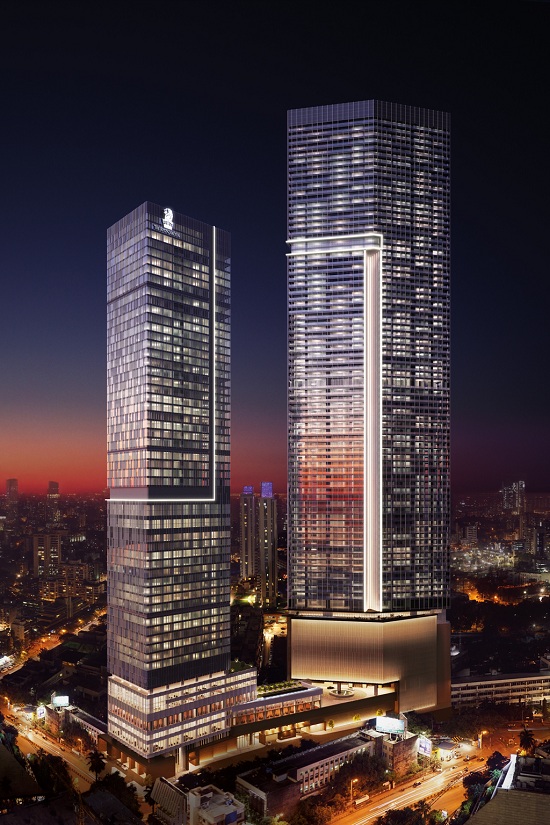
Why Is Oberoi Realty’s Three Sixty West Project in Mumbai Experiencing a Surge in Demand for Luxury Apartments?

Oberoi 360 west

Oberoi Realty’s luxury project Three Sixty West located in Mumbai’s plush Worli area has witnessed 19 transactions since April 2024 worth over ₹1,300 crore according to documents accessed by CRE Matrix. The project has garnered interest from well-known personalities including Shahid Kapoor and Abhishek Bachchan, D’Mart’s Radhakrishna Damani, Everest Masala Group’s promoter, and Vratika Gupta, founder of a well-known decor brand. 

The luxury residential units included in these transactions range from 5,600 square feet to nearly 17,000 square feet. 16 of the 19 transactions that have occurred since April 2023 have been in the primary (direct) market and have involved the developer Oberoi Realty, its partners, and the buyers. According to documents accessed, Oberoi Realty sold seven of the 16 apartments involved in these deals and its partner sold the remaining apartments.

Three Sixty West’s exceptional seaside location, which offers breathtaking views and luxurious living areas, is one of its key attractions. To suit the interests of affluent customers, the project consists of two towers with 4 BHK and 5 BHK flats in addition to duplex apartments and penthouses. The project obtained its certificate of occupation in 2022. 

The 360 meter tall sea-view project takes its name, most likely, from the fact that every apartment faces west. The Three Sixty West project, according to the MahaRERA portal, is registered under the name Oasis Realty as the promoter. It has four promoters: Vikas Oberoi-sponsored companies Oberoi Constructions Ltd and Astir Realty LLP; SkyLark Buildcon Pvt Ltd; and Shree Vrunda Enterprises, which is a part of Sudhakar Shetty’s Sahana Group.

With developers charging approximately ₹1 lakh per square foot for sea-view units in the Worli neighborhood, Three Sixty West is competitive in the luxury condo market. Local brokers claim that these apartments’ primary market values range from ₹1.25 lakh to ₹1.50 lakh per square foot. The project’s upscale facilities and prime location, in addition to its affordability, have created a strong demand.

The property has also become more appealing as a result of Radhakishan Damani and his associates’ bulk acquisition of 28 flats in February 2023 for ₹1,238 crore. Some of these apartments have already started to sell for about ₹1 lakh per square foot on the resale market. More of these entering the market could result in competitive pricing and more room for buyer negotiation.

Despite the constantly high sales at Oberoi Three Sixty West, real estate experts think the availability and cost of resale apartments will determine the direction of the market going forward. The reinstatement of 28 units from the bulk deal may affect the dynamics of the primary and secondary markets, giving buyers additional choices and pricing points.

The project’s ability to draw in buyers will be largely dependent on how the market develops over the next several months.

Recent Transactions
Oberoi Realty’s Three Sixty West is highly sought after for its prime location and luxury features. In a recent transaction, fashion designer and the creator of the upscale home décor brand Maison Sia, Vratika Gupta, purchased a luxury apartment in Three Sixty West for Rs 116.42 crore. Also, Bollywood actor Shahid Kapoor and wife Mira Kapoor purchased a luxury sea-view apartment in the Three Sixty West for around 60 crore.

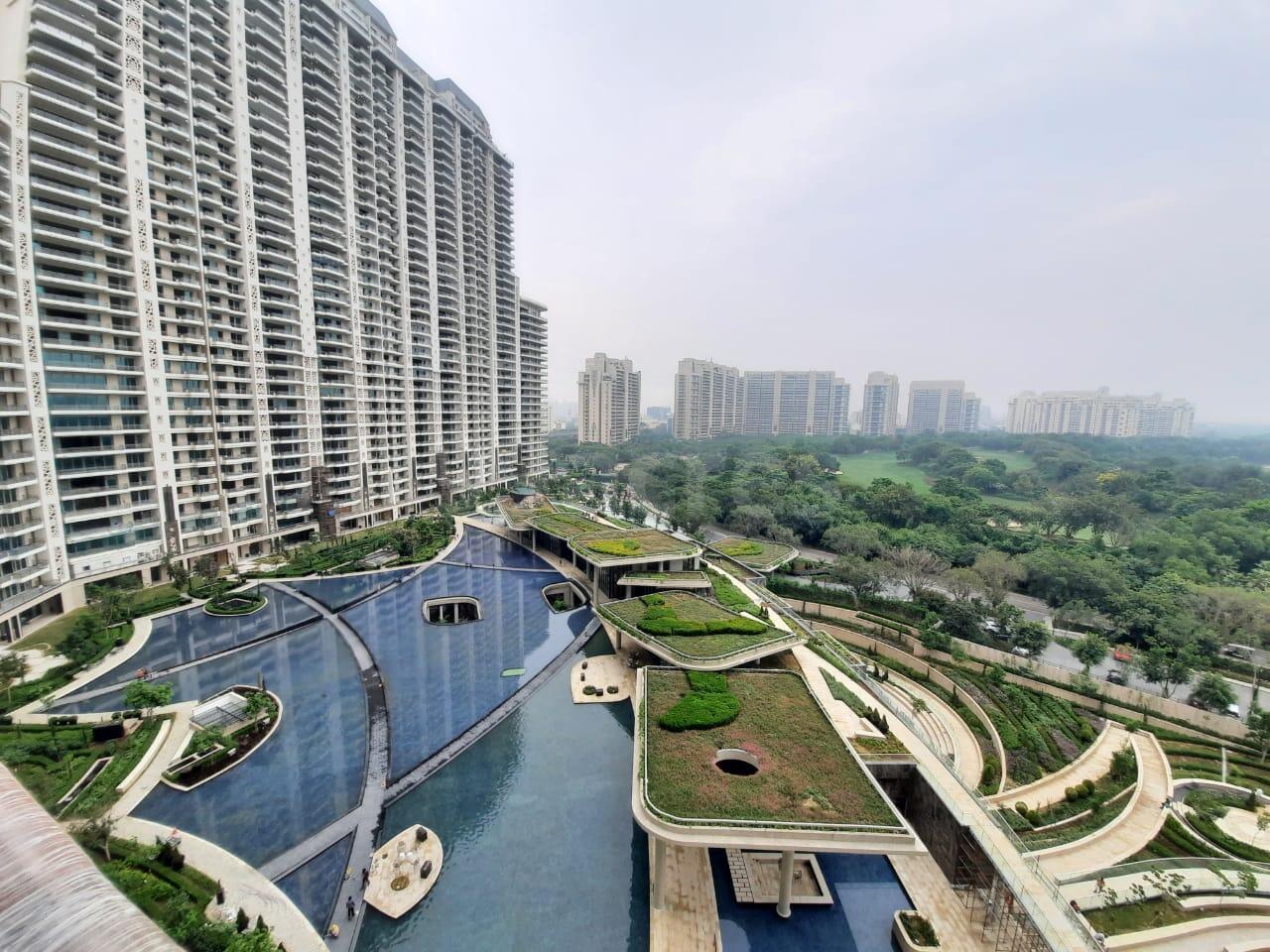
Lenskart’s Peyush Bansal and Dhanuka Family Members Acquire Luxury Apartments in Gurugram’s DLF The Camellias

Camellias_DLF

Prominent industry players including Peyush Bansal, the founder of Lenskart, and the Dhanuka family from Dhanuka Agritech, have made notable acquisitions in DLF’s luxurious residential project The Camellias in Gurugram. According to the documents accessed by CRE Matrix, these sumptuous properties were booked between 2015 and 2022, with conveyance deeds executed in April 2024. The cumulative value of these properties amounts to Rs 106.4 crore. 

The founder of Lenskart, Peyush Bansal purchased a 7,461-sq. ft apartment in August 2022 for Rs 27.02 crore. This apartment comes with four parking slots. On April 29, 2024, the conveyance deed for this deal was completed, and Bansal paid a stamp duty of Rs 1.89 crore.

On June 24, 2019, Ram Gopal Agarwal, the group chairman of Dhanuka Agritech Limited, and his wife Urmila Dhanuka signed a contract with DLF to buy a 7,361-sq. ft apartment at The Camellias. The final payment was made in March 2021, after he paid Rs 22.55 crore for the property. On April 26, 2024, the property’s conveyance deed was signed and a stamp duty of Rs 1.35 crore was paid.

Between June and August 2015, Rahul Dhanuka, Joint Managing Director at Dhanuka Agritech, paid Rs 24.31 crore for a 7,361-square-foot apartment. On April 18, 2024, the conveyance deed was completed and Rs 1.70 crore in stamp duty was paid. There are four parking spaces on this property as well.

Harsh Dhanuka, Executive Director of Alliances & Supply Chain at Dhanuka Agritech, paid Rs 32.52 crore for a 9,419-square-foot apartment with five parking spaces. The conveyance deed for his property was executed on April 23, 2024, and he paid a stamp duty of Rs 2.27 crore.

These properties were purchased directly from the developer of The Camellias. During the time these deals were closed, The Camellias’ prices ranged from Rs 30,634 to Rs 37,000 per square foot. However, These apartments currently go for about ₹75,000 per square foot on the market. The lowest apartment at Camellias is available for ₹11 lahks per month for an unfurnished unit and ₹14 lahks for a furnished one.

Recent Transactions

The high-end transactions indicate Gurugram’s growing appeal among affluent buyers. The sharp increase in property values highlights the demand for luxury homes. In a recent transaction, MakeMyTrip’s Deep Kalra, Den Network’s Sameer Manchanda, and Assago’s Ashish Gurnani bought apartments at Gurgaon’s The Camellias for a cumulative total of Rs 127.58 crore. 

Elevate your decisions in real estate as a developer or broker with CRE Matrix‘s data-driven insights. Book a demo now.

What are the Top 10 Cities in India for Property Investment?

Investing in real estate is one of the most important financial commitments you can make, and if you do it correctly, it can alter you entire life. Real estate investment in India can have its benefits as well as downfalls. Making the right choice can enable you to achieve your goals, while making the wrong choice make your finances as well as other issues worse. This is why, you need to be informed when you decide to pick the correct option and amplify the rewards of your investment.

Property Investment in India

It’s difficult to pin point which of the top 20 cities in India are good for real estate investment, as it can depend on numerous factors including current market conditions, infrastructure development, and government policies. Parameters that are taken into consideration when deciding the top cities for real estate investment in India comprise of include the strength of the local economy, population growth, and the steadiness of the real estate market, among many others.

Moreover, factors relating to proximity to amenities and transportation, local zoning laws as well as the availability of financing can also play a significant role in deciding whether a particular city is a good place to invest in property. However, a couple of the cities that is typically worthy options for real estate investment in India are:

Mumbai: Dubbed as the financial capital of India, Mumbai has a powerful economy and a flourishing real estate market.

Delhi: As the capital city of India, it has a large population and a developing economy, thereby making it a famous destination for real estate investment in India.

Bengaluru: It is the IT capital of India. Bengaluru has a huge amount of job opportunities and a large population, thereby making it a great destination for real estate investment in India.

Pune: Renowned for its pleasant climate and proximity to the IT hub of Hinjewadi, Pune has emerged as a lucrative destination for property investment in the last couple of years.

Kolkata: It is the commercial as well as cultural capital of Eastern India. Kolkata is an incredible place if you’re looking for properties at budget-friendly rates.

Hyderabad: Renowned for its IT and biotechnology industries, Hyderabad has a developing economy and a huge number of job opportunities, thereby making it a great place for real estate investment in India.

Chennai: Known as a major industrial and cultural center, Chennai has a fast-growing economy and abundant job opportunities. This is why it would make for a good destination for real estate investment.

Ahmedabad: It is the largest city of Gujarat and is known for its abundant job opportunities. This makes it an excellent place for property investment.

Surat: Famed for its textile industries, Surat has a strong growing economy and a plethora of job opportunities. This makes it an incredible destination for real estate investment in India.

Jaipur: The pink city is known for its strong economy and a large number of job opportunities, particularly in the tourism sector, thanks to its heritage. This makes it a great destination for investment in property.

In a nutshell, these are top 10 cities that are excellent for real estate investment in India. If you wish to get real estate insights on a pan-India basis, then head over to CRE Matrix, a leading real estate data analytics company in India.

Real Estate 101 – A to Z about the 99-year Lease Concept in India

In the Indian real estate sector, the concept of ‘freehold property’ and ‘leasehold property’ are a couple of the common jargon that one usually comes across regularly. When it comes to freehold property, the development authorities use the auction to sell the land to the developer. The property was constructed for such land and belongs to the owner for an unspecified amount of time. As for leasehold property, the developer can acquire the property via a lease for 30 to 99 years, from the time the construction commences. 

What is the 99-Year Lease Concept?

The landowner allows the land for lease for 99 years which commences from the date the allotment was conducted. The developer will have to abide by the specific terms and conditions of the government and the landowner for the lease. The developer is allowed to construct the property and put it up for sale. The buyer will be the owner for 99 years after which the landowner can assert ownership of the land again. The landowner is also given some ground rent which has been approved by both parties. 

The property owner can look at extending the lease by the lease renewal at the end of the term. The leasehold property can also be turned into freehold property by paying the fee for it. Moreover, it is also possible for property owners to purchase another lease when the original lease ends or even extend it to 999 years. 

Other than India, the concept of the lease being 99 years is also a globally-accepted concept. As per the conventional American common law, it is a subjective period to encompass the life expectancy of any lessee or lessor and safeguard the property ownership of the lessor. Moreover, the duration of 99 years is believed to include not one but three generations. 

Pointers about 99-Year Concept 

  • Numerous authorities provide land to develop apartment projects but only on a leasehold basis.
  • It is possible to lengthen the lease duration to 999 years by paying a fee. 
  • On buying a leasehold property, the home buyers need to verify whether the seller has been provided with a transfer memorandum from the local development authority. 
  • Developers choose to erect flats on leasehold lands since the expenses of such parcels are lesser when compared to freehold lands. 
  • Banks do not favor funding the purchase of a leasehold property, particularly when the remaining lease duration is lesser than 30 years. The value of such properties also drops down as the end of the lease period looms ahead.
  • The main benefit of buying a leasehold property is the rate, which is usually lower than properties that were constructed on freehold land. 

CRE Matrix is India’s leading real estate data analytics company in India. The firm offers significant crucial data in the commercial and residential real estate arena through its various tools and resources. 

For more such exciting analysis and details on real estate, visit CRE Matrix.