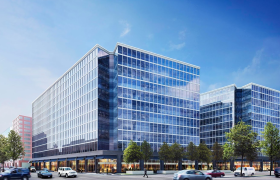


India’s office market has moved decisively beyond recovery. What began as a post-pandemic reset has evolved into a structurally stronger, more disciplined cycle defined by quality absorption, occupier consolidation, and sustained rental growth.
Contrary to early expectations, hybrid work has not reduced demand for office space in India. Instead, it has reshaped where, how, and what type of office space is being leased.
The data now clearly reflects this shift.
Leasing Momentum: Beyond Pre-COVID Benchmarks
Before the pandemic, India’s Grade A and A+ office market was already on a strong growth trajectory. Between 2018 and 2019, annual leasing volumes averaged ~54 million sq ft.
The post-COVID rebound has exceeded those levels.
- 2023 leasing demand reached ~62 million sq ft, nearly 15% higher than pre-COVID peaks
- Leasing activity in Q3 CY’25 alone stood at 19.6 million sq ft
- In the first nine months of CY’25, absorption touched 62.3 million sq ft, indicating sustained occupier confidence
This is not pent-up demand being released it reflects structural expansion by technology firms, GCCs, BFSI players, and engineering-led enterprises.
Supply Expansion with Improving Discipline
India’s office market crossed a significant milestone in Q3 2025, with Grade A/A+ stock surpassing 1 billion sq ft.
What makes this cycle distinct from earlier ones is not just scale but balance.
- Demand is consistently outpacing new completions
- The demand-to-supply ratio stands at ~1.2x, indicating absorption strength
- Vacancy levels have declined to multi-quarter lows, despite continued stock additions
This marks a departure from earlier cycles where aggressive supply often preceded demand, leading to prolonged vacancy overhangs.
Rental Performance: From Stability to Growth
Rental behaviour is now reflecting tightening market conditions.
- Pan-India weighted average passing rents reached ₹92.1 per sq ft/month in Q3 CY’25
- Rental growth is no longer limited to CBDs; high-quality peripheral corridors are also seeing upward pressure
- Markets with strong GCC and multinational occupier presence are leading rental hardening
This shift indicates that occupiers are prioritising quality, compliance, efficiency, and talent access and are willing to pay for it.
What Has Changed in Post-COVID Office Demand
1. Quality Over Quantity
Occupiers are consolidating into Grade A+ assets, reducing exposure to inefficient or non-compliant buildings.
2. Office as a Strategic Asset
Offices are now seen as collaboration, innovation, and talent-retention hubs not just cost centres.
3. GCC-Led Expansion
Global Capability Centres continue to be a major absorption driver, providing long-term stability across Bengaluru, Hyderabad, Pune, and NCR.
4. Flight to Managed Ecosystems
Integrated business parks with strong infrastructure, amenities, and ESG readiness are outperforming standalone assets.
Emerging Opportunities Across the Value Chain
For Developers
- Focus on future-ready Grade A+ assets
- Emphasis on sustainability, flexibility, and efficiency
- Disciplined phasing aligned with demand visibility
For Investors and REITs
- Strong re-leasing visibility due to tightening vacancy
- Rental growth supporting yield stability
- Asset quality differentiation becoming more pronounced
For Occupiers
- Early-mover advantage in emerging corridors
- Portfolio optimisation across cities
- Ability to lock in space before further rental hardening
Outlook: The Next Phase of Office Growth
India’s office market has entered a post-pandemic expansion phase, not a recovery phase.
With:
- Leasing volumes consistently above pre-COVID levels
- Vacancy tightening despite large stock additions
- Rentals showing broad-based upward movement
…the office sector is positioned for sustained, demand-led growth.
The future of office spaces in India will be shaped less by remote-work narratives and more by economic expansion, global integration, and the country’s role as a core office destination.
1: What is the future of office spaces in India after COVID?
India’s office market has moved beyond recovery into a structural growth phase. Leasing volumes are consistently above pre-COVID levels, vacancies are tightening, and rentals are showing broad-based growth driven by GCCs and multinational occupiers.
2: Has hybrid work reduced office space demand in India?
No. Hybrid work has reshaped office demand rather than reduced it. Occupiers are prioritising high-quality Grade A and A+ offices that support collaboration, compliance, and employee experience, leading to consolidation rather than contraction.
3: Which sectors are driving office leasing demand in India?
Technology firms, Global Capability Centres (GCCs), BFSI players, and engineering-led enterprises are the primary drivers of office space absorption across key markets such as Bengaluru, Hyderabad, Pune, and NCR.
4: Are office rentals increasing in India post-COVID?
Yes. Pan-India weighted average office rents have entered a growth phase, supported by tightening vacancies and sustained occupier demand, especially in markets with strong multinational and GCC presence.
5: What opportunities does the post-COVID office market create for developers and investors?
Developers benefit from demand for future-ready Grade A+ assets, while investors and REITs gain from improving rental growth, strong re-leasing visibility, and clearer asset quality differentiation.
6: Is India still an attractive office destination globally?
Yes. India continues to strengthen its position as a global office destination due to economic expansion, global integration, talent availability, and long-term GCC-led demand.
Elevate your decisions in real estate as a developer or broker with CRE Matrix‘s data-driven insights. Book a demo now!