

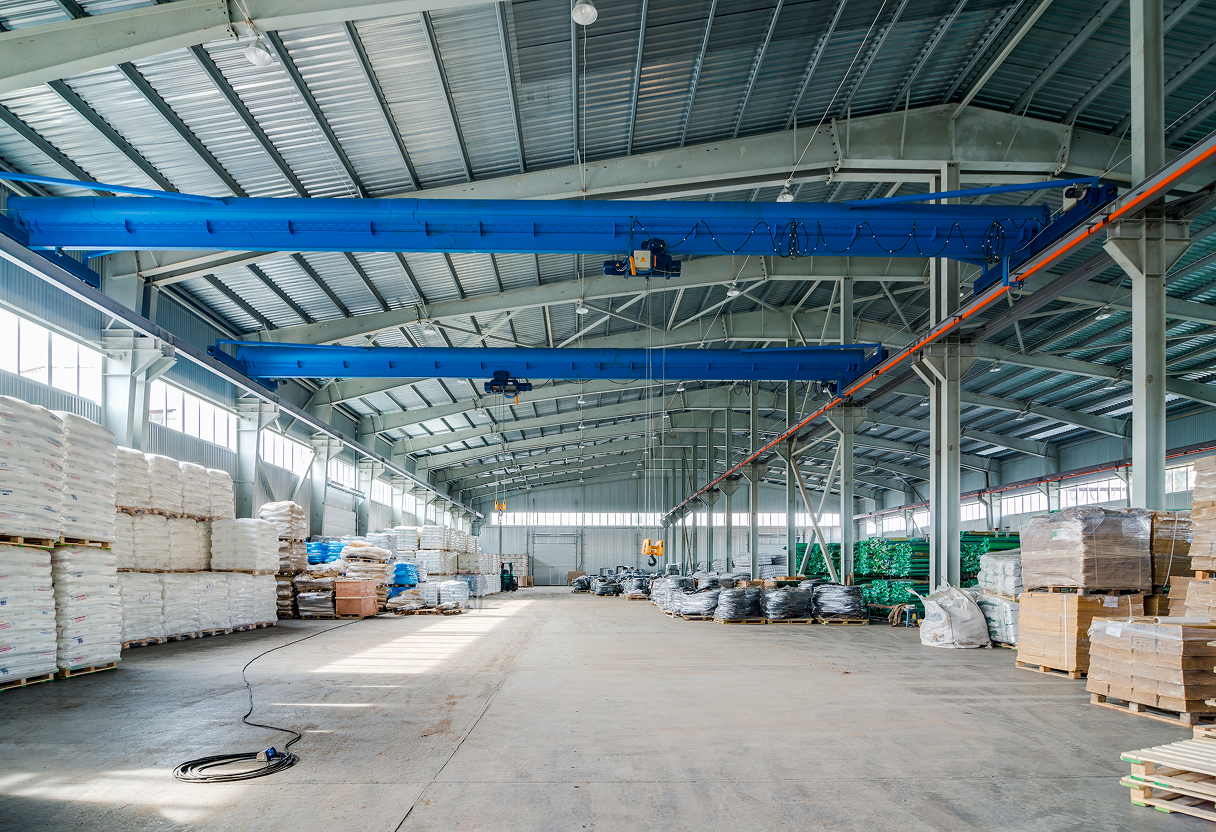
India’s warehousing market is on a strong growth path. India Warehousing Market Report Q1 2024, published by CRE Matrix and CREDAI, shows that demand is consistently outpacing supply across major cities. This imbalance is pushing rentals higher and driving occupancy levels up. As supply chains modernise and businesses continue to expand, the sector is rapidly becoming more structured, efficient, and attractive to investors.
India Warehousing Market Report Q1 2024: Key Highlights
To begin with, the India Warehousing Market Report Q1 2024 reflects a stable and demand-driven market with improving fundamentals.
- Warehousing rents increased by 5% year-on-year
- Vacancy levels declined by 1.2% across the top cities
- Demand was 1.4x higher than supply additions
- Pune and NCR contributed 45% of the total demand
- MMR and NCR accounted for 53% of the total supply
- Grade A warehousing stock is expected to reach 300 msf by 2025
Overall, these trends indicate consistent growth and strong occupier activity.
India Warehousing Market Report Q1 2024: Demand and Supply Trends
Moving forward, the India Warehousing Market Report Q1 2024 shows that demand remains strong across industries such as e-commerce, logistics, and manufacturing, while supply continues to expand in key markets but still falls short of fully matching demand. This is driven by strong demand from 3PL and e-commerce sectors, along with manufacturing, contributing to long-term space absorption. At the same time, supply remains largely concentrated in MMR and NCR, with overall demand consistently exceeding new supply additions. As a result, this demand-supply gap continues to support rental growth and faster leasing across the market.
India Warehousing Market Report Q1 2024: Rental Trends
In addition, rental trends across cities reflect the impact of sustained demand highlighted in the India Warehousing Market Report Q1 2024.
- Overall, rents increased by 5% annually
- MMR recorded up to 20% rental growth
- Stable rental trends in NCR, Pune, and Bengaluru
- Demand-driven growth supporting rental appreciation
Therefore, rental growth remains steady and attractive for investors.
India Warehousing Market Report Q1 2024: Vacancy Levels
At the same time, vacancy levels have improved, indicating a healthier market as per the India Warehousing Market Report Q1 2024.
- Vacancy reduced to around 8.3% across top cities
- Faster absorption of Grade A warehousing spaces
- Improved occupancy levels across key markets
- Balanced supply ensuring stability
Consequently, lower vacancy levels signal strong occupier demand.
India Warehousing Market Report Q1 2024: Top Cities Driving Growth
Furthermore, the India Warehousing Market Report Q1 2024 highlights the cities leading warehousing growth in India, with NCR witnessing strong leasing activity and demand, while MMR stands out for high supply addition and rental growth. At the same time, Pune continues to be a major contributor to overall demand, and cities like Bengaluru, Chennai, and Hyderabad are emerging as important logistics hubs. Together, these cities continue to play a critical role in shaping the sector.
India Warehousing Market Report Q1 2024: Key Demand Drivers
Another key takeaway from the India Warehousing Market Report Q1 2024 is the diverse demand base supporting the sector.
- 3PL (Third-Party Logistics) is the largest occupier
- E-commerce is driving rapid expansion
- Manufacturing ensures a steady demand
- Retail and FMCG supporting last-mile delivery
Because of this, the market remains resilient and well-balanced.
Conclusion
In conclusion, the India Warehousing Market Report Q1 2024 highlights a strong and evolving sector. Rising demand, stable rentals, and improving occupancy levels are strengthening the warehousing market across India.
For investors, developers, and occupiers, this presents a valuable opportunity to tap into India’s growing logistics ecosystem.
Elevate your decisions in real estate as a developer or broker with CRE Matrix‘s data-driven insights. Book a demo now!