

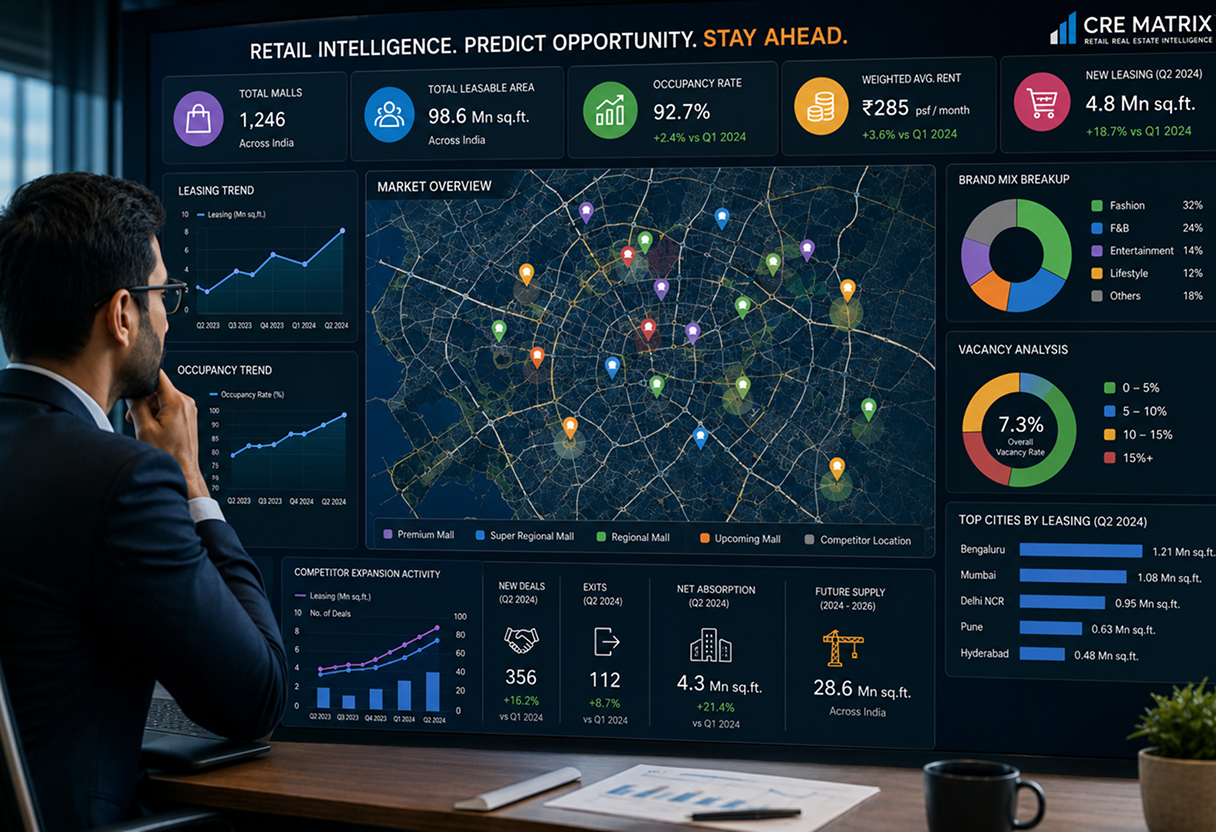
Retail real estate has become far more competitive than it was a few years ago. New malls are entering established micro-markets, consumer preferences are evolving rapidly, and rental dynamics are constantly changing based on demand, footfall, infrastructure, and category performance.
In such a market, waiting for trends to become obvious can be expensive.
The smartest occupiers are no longer reacting to market shifts after they happen. They are predicting them early using retail analytics.
Why Reactive Leasing No Longer Works
Traditionally, many retail occupiers relied on broker conversations, limited market reports, and past experience to make location decisions. But modern retail markets move too fast for outdated information.
A competitor entering a micro-market, rising vacancy in a premium mall, changing rental benchmarks, or a shift in brand mix can significantly impact profitability.
By the time these signals become visible to everyone, the best opportunities are already gone.
Today’s leading occupiers want answers before making decisions:
- Which malls are attracting stronger footfall-driving brands?
- Where are rentals expected to rise?
- Which competitors are aggressively expanding?
- Which retail clusters are witnessing higher absorption?
- What rental terms are competitors negotiating?
This is exactly where retail analytics changes the game.
How does Retail Analytics help Occupiers Predict Market Movements?
Retail analytics transforms raw transaction data into actionable business intelligence.
Instead of relying on assumptions, occupiers can evaluate demand, supply, pricing trends, tenant movements, and future market potential at a granular level.
With access to authentic registered transaction intelligence and unit-level insights, businesses can identify opportunities before the wider market reacts. This allows brands to move from reactive leasing to predictive decision-making.
For example, if analytics shows rising leasing activity from premium F&B brands in a particular micro-market, occupiers can secure strategic locations early, often before rentals increase.
Similarly, analyzing vacancy trends and competitor exits can help brands negotiate better commercial terms or identify distressed opportunities.
How CRE Matrix Enables Smarter Retail Decisions
CRE Matrix provides one of India’s most comprehensive retail analytics platforms, helping occupiers, mall owners, developers, and investors make data-backed real estate decisions.
The platform combines registered transaction intelligence with deep retail market insights across India.
Its retail analytics capabilities help businesses:
1. Understand Brand Mix Performance
Occupiers can analyze how different brand mixes influence mall performance, revenue potential, and visibility. This, therefore, helps retailers identify the right malls and neighboring occupiers that align with their target audience.
2. Benchmark Rentals and Commercial Terms
One of the biggest advantages of data-driven leasing is negotiation power. CRE Matrix enables occupiers to compare rentals, clauses, and deal structures signed by competitors. This creates stronger leverage during lease negotiations and reduces the risk of overpaying.
3. Track Competitor Expansion
Retail analytics also allows businesses to monitor competitor activity, lease growth, and occupancy trends. Understanding where competitors are expanding can reveal emerging retail corridors and high-growth consumption zones before they become saturated.
4. Analyze Demand, Supply, and Vacancy Trends
Successful expansion depends heavily on timing. To support this, CRE Matrix provides insights into market demand, pricing, vacancy, and supply trends across properties, localities, and cities. Consequently, occupiers can make more informed location decisions and reduce expansion risks.
5. Compare Competing Malls
Occupiers can also benchmark competing malls to understand pricing strategies across categories like F&B, fashion, and entertainment. This provides clarity on where brands can achieve stronger profitability and customer traction.
How Is Data Becoming the Biggest Competitive Advantage?
Retail real estate decisions can no longer rely purely on instinct. The occupiers growing successfully across India are using analytics to uncover opportunities early, optimize lease negotiations, improve portfolio performance, and reduce occupancy risks. The real advantage is access to the right data at the right time. Because in today’s retail market, the smartest occupiers do not follow market shifts. They predict them.
Elevate your decisions in real estate as a developer or broker with CRE Matrix‘s data-driven insights. Book a demo now!